Friday, 10 July 2020

Still on fibreglass

The materials for the heads sole arrived last Friday, usual good service from East Coast Fibreglass Supplies, so this week I was able to crack on with stiffening up the sole. I started by giving the existing sole a good sanding with a random orbital sander and some 50 grit discs followed by a good clean up. once this was complete I cut out the three layers of 450g biaxial glass cloth so that everything was ready for me to start straight away on the job on Wednesday morning. I started on Wednesday morning by cleaning down with acetone before laying up the three layers of glass cloth on the sole and then left it to cure.


After glassing over the sole

The first task today was to trim round the bilge access opening with an oscillating multi tool, I have a Bosch cordless and is one of the most useful power tools that I have should have bought one years ago.


After trimming the opening

I had some problems getting the biaxial cloth to form itself into the access opening as there is a tight double bend which forms the recess for the access cover as well as the corners of the opening and on inspection it would appear that the top lamination had lifted leaving a void along the right hand end of the opening, unfortunately it does not show up in the photograph. I think maybe that 450g cloth was a bit on the heavy side and that I would have been better going for perhaps four layers of 300g cloth however the rest seemed to be OK. To rectify the situation I cut off the bubble, which was only one layer, with the multi tool, before building up the recess with a strip of biaxial cloth and some more resin. The whole area will require a good sanding and some fairing compound before gelcoating, as a job like this is basically working in reverse, the normal method of fibreglass construction is to start out with a polished mould into which goes the gelcoat followed by the fibreglass. Trying to lay fibreglass that is level enough to take the gelcoat is a lot more difficult especially as I am not an expert. Next week the aim is to get the sanding and fairing done and the gelcoat applied the plan is to use two coats of gelcoat with a coat of flocoat over it topreclude the air and allow it all to cure.


Friday, 3 July 2020

Back to fibreglass

After some thought I have decided to bring the heads sole repair level with the remainder of the upstand and then to stiffen up the sole, which is a little bit on the bendy side, with two or three layers of 450g biaxial cloth and resin then gelcoat over the whole lot on completion. I  started this week by laying up more CSM on the repair until I ran out of resin, once the resin had cured I sanded out the high spots leaving some low areas which are shallow enough that I can fill them with fairing compound made up with polyester resin and glass beads. The materials for the completion of the job arrived today so that I should be able to press on with this task next week.


After sanding the repair

The gelcoat on the sole is not in good condition there is some cracking which I think is more than likely down to impact damage it is also discoloured and even after sanding does not look very good so re gelcoating is going to be the best option. This has been a bit of a short post as a lot of time was taken cleaning up after sanding the new fibreglass although my orbital sander has a dust collection bag it still seems to spread dust everywhere, probably a better bet would be a connection to a vacuum cleaner.

Also this week I have been experimenting with wood dye in an attempt to match the merenti, that I am using for the door frames, with the remainder of the internal trim, that which I used for the cabinet door trim did not turn out to be a particularly good match so this time I have tried Colron deep mahogany which after several coats of varnish has turned out to be a much better match.


Test piece against the compression post trim

The odd patches are a result of the reflection of the camera flash in the varnish


Friday, 26 June 2020

Wood and varnish again

I haven't done a great deal this week the aim was to finish varnishing the last of the wood trim and fixing it in place. I started in the aft cabin with pieces to cover the forward and aft end of the locker panels on both sides, the photographs show the port side.


Aft cabin forward end 


Aft end

I then moved on to the long lengths either side of the mast compression post in the saloon, the piece on the starboard side was an exact fit between the clock mount and the compression post which makes picking up the keyhole plate mountings for the clock much easier, this was purely accidental.


Trim either side of compression post


The next move was to finish the trim round the heads internal moulding there is a cover strip over the join between the locker moulding and the sole moulding under the doors. the vertical trim to the left hand side of the doors and finally the trim at each end of the worktop, this part is now pretty much complete.


Heads moulding

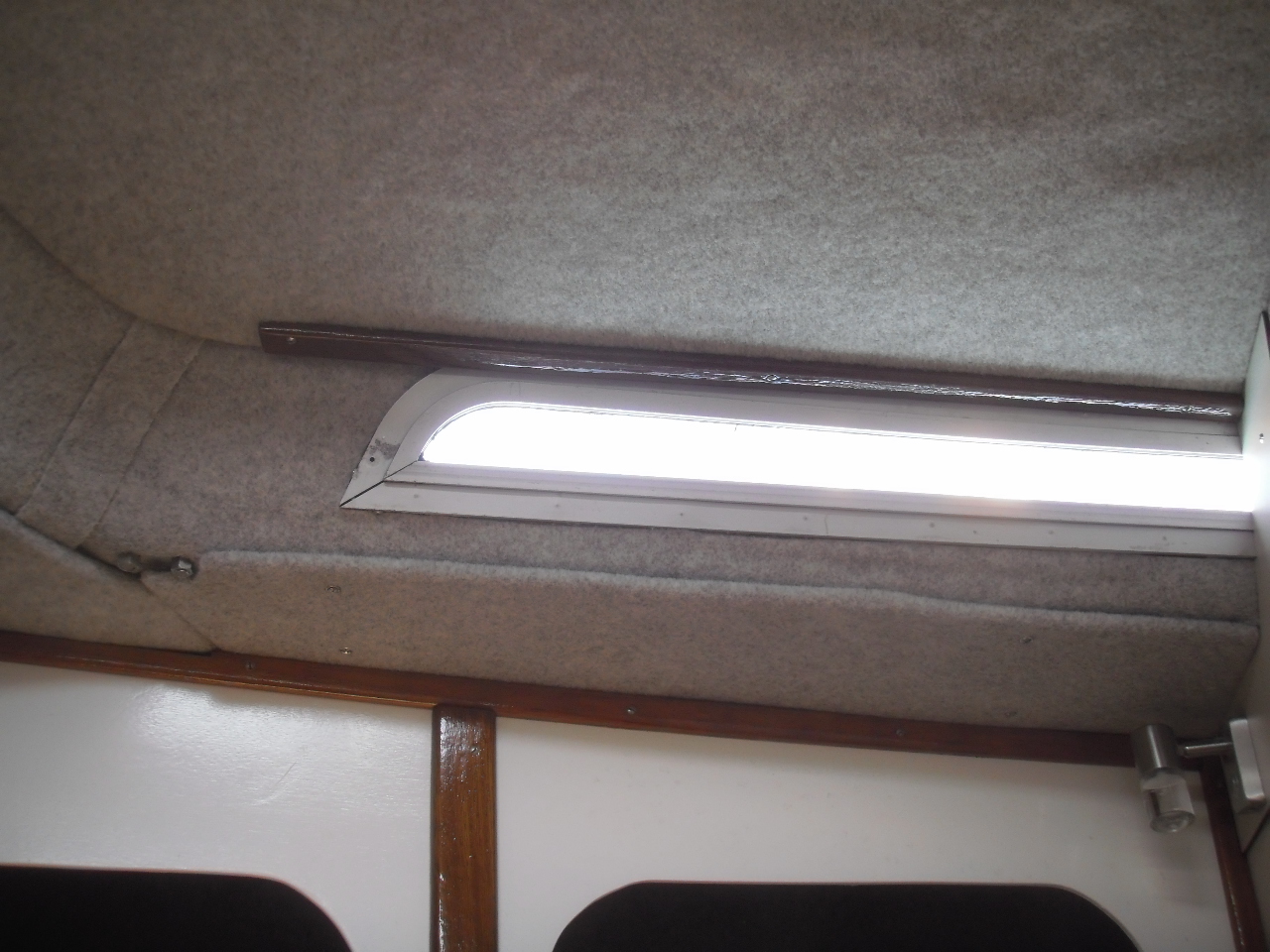
The last two pieces were above the windows in the forward cabin they help support the head lining and also originally provide something for the curtain track to be secured to.


I have now used up all of the original hardwood that came with the boat most of it has not been put back in its original position, but I have tried to make the best use of it without too many offcuts. Reuse, recycling or upcycling whatever you want to call it has entailed plugging some of the original screw holes which I think adds to the history well that is what I will claim anyway.


Friday, 19 June 2020

Wood and varnish

I spent some time last weekend plugging redundant holes in various pieces of hardwood trim so that on Monday I could cut them to length and start sanding them ready for varnish. I have now just about used up all the remaining timber, there are just a few short offcuts left, I may have to source some more to finally finish trimming round various panels. Once the sanding was complete I have spent most of the week varnishing the various pieces.


Varnished trim

I also managed to get three coats of varnish on the mast compression post.


Varnished compression post

This afternoon I fitted the first piece of trim where the dinette internal moulding abuts the compression post, I think that the original installation was done with a jigsaw and a very shaky hand the trim is required to cover the gap.


Gap between the moulding and compression post

On the inside of the moulding I screwed a piece of timber to the compression post so that when the trim was fitted the screws went through into the timber backing so that the moulding is firmly secured, the backing timber can just be seen through the gap.


After fitting the trim

The plan for next week is to finish the varnishing and then fix all the trim pieces in place


Friday, 12 June 2020

More fibreglass

The first job this week was to start laying up fibreglass in the repair to the heads sole the area in way of the cut out is still a little low but I was thinking possibly finishing off with a piece of contrasting laminate to form a kick plate below the door.


Repair to sole

I have used polyester resin for this repair as the intention is to finish off with gelcoat which takes to polyester more effectively than epoxy, however on opening my tin off white gelcoat I found that it had gone off apparently this stuff has a limited shelf life I will need to order some more from East Coast Fibreglass Supplies before I can go any further. I still have a pile of original hardwood trim some of which I had sanded and varnished ready for fitting so after a bit of a sort out I found the piece for the forward end of the galley moulding and fitted it in place.


Trim fitted to galley moulding

I have identified several more pieces  which need sanding and varnishing so that will be a homework job for this weekend providing the gloss varnish has not gone hard in the tin. going by the present record it does not look promising although this tin is of more recent purchase. To finish the week I sanded the mast compression post ready for varnish next week on this boat it is in two pieces one on each side of the bulkhead, I made rather a mess as unbeknown to me the dust bag had become detached from the random orbital sander and it had blown dust everywhere before I realised what had happened.


One half of the compression post sanded ready for varnish


Friday, 5 June 2020

Back to the heads

The first job this week was to sand the forward heads door it seems that the original finish had been removed at some time and replaced with varnish however my tin of satin varnish which had not been opened for several years had gone solid so that job was put on hold until the chandlers reopen.
I then moved on to the forward doorway, I had already screwed and glued a piece of plywood into the base of the door opening to reduce the size of the gap at the base of the door, space has been left for a section of the door frame. Once that was done I turned my attention to the sole moulding for some reason a piece had been cut away under the door I am unsure why but I decided to reinstate it.


View showing cut out in the sole moulding

I have been thinking of a way to infill the cut out for quite some time  one of those jobs that was always thought about and then relegated to the too hard list I finally decided that it was time to get on and do something with it. The sole moulding was not tabbed to the bulkhead as would be expected but had been secured with screws however I don't think that these were original, stainless steel posi type, and there is a bit of a gap between the upstand and the bulkhead, however the sole moulding is secured to the hull also it is secured to the aft bulkhead by screws. After some thought I decided to build up the forward bulkhead to meet the so;e moulding and then use the bulkhead as backing to the infill of the upstand. to start with I removed the original blue laminate as I guessed that resin would not adhere very well to it, I also removed a piece of the new white laminate on the right hand side of the door opening to square everything up the cordless multi tool was just the job for this. Once this was done  I gave the exposed ply a good sanding to remove the old adhesive.


Bulkhead ready for glassing

I then used a mixture of woven rovings and chopped strand mat to build up the bulkhead to the level of the back of the upstand, there was no particular reason for using this combination of glass mat it was just what I had in stock.


Bulkhead glassed up

That is sunshine coming in through the window in between the rain this afternoon. Next week the plan is to build up the upstand from the bulkhead I don't think that it will be an invisible repair so I think that I will gelcoat it and leave it as a bit of a feature. Strangely the moulding for the heads sink unit is tabbed to the bulkhead but on the forward face of the bulkhead the forward cabin internal moulding again is not tabbed to the bulkhead in fact on the port side there is quite a large gap I am not sure what has gone on here but it looks as though the boat was originally built this way. 


Friday, 29 May 2020

Boris has said I can go out to play

At last the marina reopened a couple of weeks ago and I have been able to get down to the boat again, she was still there although looking a bit grubby it is amazing how dirty a boat will get even internally. The engine started first time after the enforced lay off. This week was the first time I had got down to some serious work I started by having a good clean up internally and then filled several holes in the lifting section of the cockpit sole, originally there were two latches which had rusted away and when I removed them I filled the fixing holes with nuts and bolts I hadn't sealed them and they always let in some rainwater so I removed the bolts and filled the holes with thickened epoxy after putting a layer of glass mat and epoxy on the underside to stop the filling from falling through.

Today I started on improving the two doors to the heads, when I bought the boat the doors and frames had been removed and the openings in the bulkheads opened up to increase the height of the doorways. When I came to address the replacement of the doors I decided to reinstate the round topped opening so that I could reuse the original doors subsequently I have been thinking that it would have been better to have made new doors and kept the enlarged opening as the new door frame would have been a much simpler proposition particularly as the original doors are not in a particularly good condition. However I didn't so today I took another look at the two doors and decided to see if I could tidy them up. The doors are veneered on one side with the foil backed wood veneer used on the rest of the woodwork, I don't know what sort of coating Marine Projects used to finish it with but it is certainly tough and awful stuff to sand off, the inner faces are finished in the same pale blue laminate used for the heads bulkheads. The door from the saloon had been over coated in varnish which looked a bit thick and tarry so I started trying to sand it back but it just clogged the sandpaper so I tried using the tungsten carbide scraper which removed the old varnish easily although it did not have much effect on the original finish.


After using the scraper

Just removing the old varnish has made a considerable improvement as can be seen above.


After removing all the old varnish

I am not sure at the moment how I intend to finish this door off but it does look much better I may try and give it a go with some wire wool. The next job will be the forward door I don't know what this one has been over coated with we shall see next week.